Read All About It -
PAWS ON PLANES INC. BLOG!
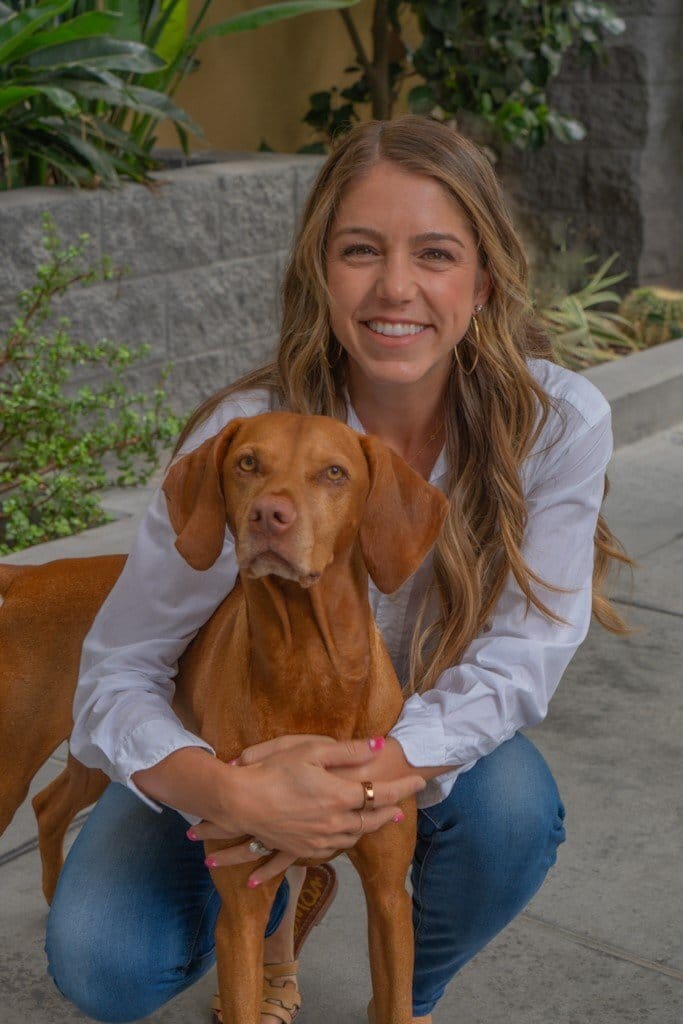
Why I Started Paws on Planes: How My Psychiatric Service Dog Helped Me
By Alison Webb
Have you ever been in a season of life so heavy that you were not sure how to get through it?
Mine started in May 2020, when my mom was diagnosed with pancreatic cancer. A few months earlier, I had moved from California to Red Oak, Iowa, to be with my fiancé (now husband). Overnight, my life shifted into survival mode. I found myself flying back and forth between Iowa and California. Navigating full-time work, caregiving, and grief during a global pandemic.
It was the most emotionally draining season of my life. But through the chaos, one thing kept me grounded: my dog, Luciano.
Luciano, My Secret Sauce

Luciano is a 50-pound Vizsla. When I would lie in bed with an eye mask on, he would lie on my chest. His weight, warmth, and steady heartbeat helped me feel calmer within minutes. It was incredible. I thought I had found the secret sauce to anxiety relief.
That experience helped me recognize how much physical contact with Luciano could help me manage my anxiety. As I learned more about psychiatric service dogs, I learned about deep pressure therapy and how a dog can be trained to provide pressure as a task that helps with a handler’s disability. That became part of the training journey Luciano and I worked on together.
Luciano became my lifeline, and the hardest part was that I could not always bring him with me. I needed his help while I was in California, too. I began exploring what it would take to train him to assist me reliably, both at home and while traveling.
Traveling with a 50-pound dog also came with practical challenges. He was too large to fly as a pet in an under-seat carrier. Private flights were beyond my budget, and the semi-private options I found did not serve the route I needed between Omaha and San Diego.
The professional training options I found cost around $10,000, and trainers were an hour away. So, I decided to train Luciano myself.
He is my first dog, and I was not a professional dog trainer, so I leaned on YouTube videos, online dog training courses, and daily practice. The information I found about traveling with a service dog was vague, conflicting, and scattered across many places. So much of the discussion focused on calling out fake service dogs. I wanted practical guidance on training and traveling responsibly.
I learned that people with disabilities can train their own service dogs and that the ADA does not require service dog certification or registration. I also learned that purchased certificates do not establish a dog’s service animal status. ADA service animal guidance: https://www.ada.gov/resources/service-animals-faqs/
For U.S. air travel, a separate set of requirements applies under the Air Carrier Access Act and Department of Transportation rules. Airlines may require DOT service animal forms, so understanding the paperwork is an important part of preparing to fly. DOT service animal guidance: https://www.transportation.gov/resources/individuals/aviation-consumer-protection/service-animals
My First Flight, Honestly
Luciano is not a typical service dog breed and he can have high energy, so I trained him to settle in all kinds of places. We had also trained a "tuck," where he settles between my feet. Then came our first flight, and it did not go well. I was so nervous, and he was restless, pawing at me and trying to sit on my lap while I kept telling him to tuck. I was worried about takeoff, landing, whether the flight attendants would give me a hard time, and all the people staring.
Later I learned that people stare because they love dogs. And let’s be honest, he is super cute. I also realized something that changed how I saw that whole flight. Luciano was working. He was trying to bring my anxiety down. It wasn't a disaster, but I cannot say it was stress free. I want to be honest.
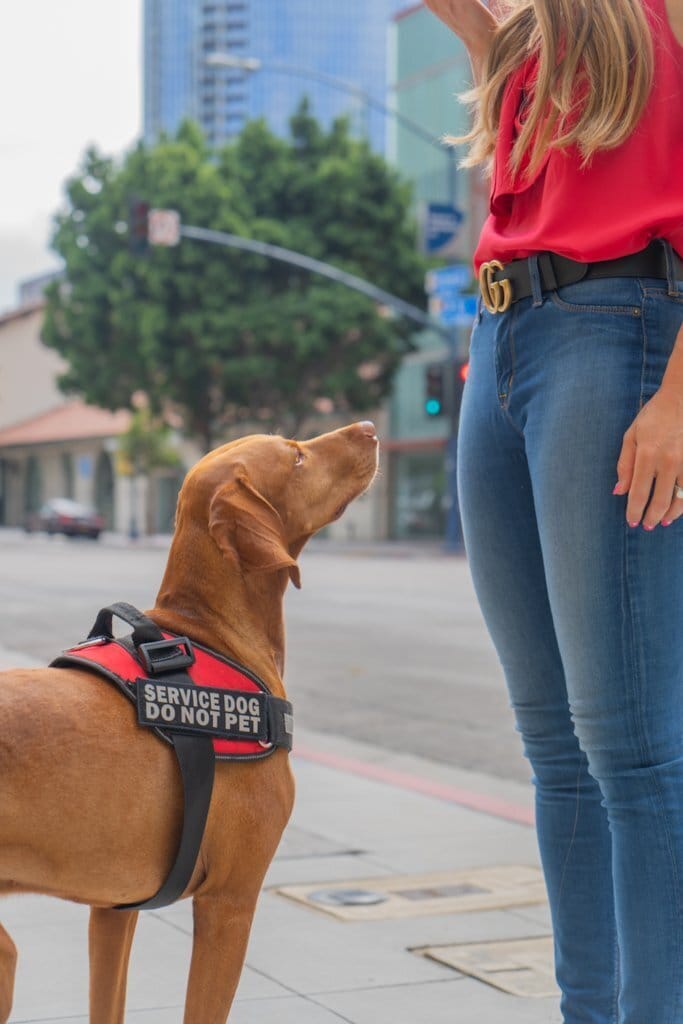
Here is the good part. After that first flight I had confidence, and on the second flight I knew what to expect and felt less nervous. Luciano slept the whole flight. Now I feel relaxed when we fly, and he sleeps the whole way. The biggest lesson I can share is that your dog feeds off you, so if you feel confident and prepared, your dog will too.
I have picked up a few more lessons along the way. Once, I arrived late, missed the bag check cutoff, and almost missed my flight. I was rebooked, and the change unlinked my service dog paperwork from my reservation. Now I carry a paper copy and double-check that his information is still attached whenever my flight changes.
I also do not bring Luciano on every trip. When I flew to Italy for a friend’s wedding, I left him at home. The journey turned into a 48-hour travel day, and I was glad he was comfortable at home. Being a good handler means thinking about your dog’s needs, too.
How Paws on Planes Was Born

I used to believe that starting a business needed a lightning bolt moment, but for me it was less of a spark and more of a slow burn. About four years after I started this journey, a friend of a friend reached out for help flying with her dog. She said, "I've been Googling for hours and I'm more confused than ever." She had the exact same questions I once had. That was my moment of clarity, because I realized I had not just figured this out for myself. I had built a roadmap that other people needed.
I started writing everything down, from airport security and airline paperwork to public access training and deep pressure therapy. I turned it all into the clear step-by-step system I wished I had had, and that became Paws on Planes Inc. I did not plan this career. I lived into it, going from anxious traveler and grieving daughter to business owner and advocate, helping people get their independence back one flight at a time. My story was featured by CanvasRebel, and I share it openly. I believe in being honest about struggle, because with the right mindset you can turn struggle into a win.
How I Can Help You

If you have a psychiatric service dog, or hope to, my course Ready for Takeoff is the place to start. Ready for Takeoff is my online, self-paced Service Dog Travel Training Course, created to help you prepare for air travel with your service dog.
For those with established task training and public access skills, the travel preparation may take four to eight weeks. Puppies and dogs still developing those skills will need additional training time, and each team’s timeline will vary. You do not need any prior training experience, but you do need to put in the time and effort, because this is a process and not a shortcut.
Across six modules, I walk you through how to prepare for the airport and your flight, including how to
- Train obedience, settling, and public access skills
- Prepare for TSA screening, boarding, and your first flight
- Complete Department of Transportation Service Animal Air Transportation Form (DOT paperwork and how to properly link your service dog to your airline reservation)
- Choose seating based on your dog’s size, the aircraft layout, and airline requirements, and plan for layovers and relief breaks
The course includes guided video lessons, printable workbooks, checklists, and practice exercises. I am also available for calls as needed when you have travel or training questions. Progress takes consistent time and practice, and I want you to understand what you are working toward at each step.
If you are ready to prepare for your next trip, you can explore Ready for Takeoff and enroll for $697.
If you would like to talk through your situation first, you can book a free 30-minute discovery call.
I remember how much I wanted someone to help me make sense of it all. That is the support I hope to give you and your dog as you prepare for your next flight. If you are just getting started, my free guides are a great first step.
Here is the service dog guide: https://travel.pawsonplanesinc.com/service-dog-travel-guide and
here is the pet guide: https://travel.pawsonplanesinc.com/pet-owners-travel-guide
Your dog feeds off you, so let's get you both feeling confident and prepared. Because the sky isn't the limit. It's just the beginning.


Hi, I Am Alison
CEO Of Paws On Planes Inc.
I’m the founder of Paws on Planes and your go-to guide for flying with dogs, whether you’re a pet parent or traveling with a psychiatric service dog.
Stick around for guides, travel hacks, and everything you need to fly stress-free with your furry companion.